
Science Fiction films
CineVerse guide
Choose science fiction by its central question
Science fiction is most useful as a question-making form. A film may ask what counts as human, who controls a technology, how a society distributes risk, or what isolation does to judgement. Spaceships and machines are tools for posing those questions, not sufficient reasons to group every title together. The quickest route through a crowded catalogue is therefore to decide which uncertainty you want to explore.
This guide organises that decision around theme, scale and world-building. It explains how to tell an idea-led chamber piece from spectacle, how to judge the amount of explanation you want, and why classification and accessibility still require release-specific checks. Nothing here retells a listed film or treats technical scale as a measure of quality.
Who this is for
This guide is for viewers who enjoy speculative ideas but find a single science-fiction label too broad. It supports solo choice, discussion groups and thematic double bills. It does not evaluate scientific accuracy title by title, and it cannot establish accessibility or suitability without checking the exact release on an official service and the BBFC.
Start with the governing question
Technology stories ask who gains power and who bears the cost. Identity stories test memory, bodies and personhood. First-contact narratives are often really about language and interpretation, while future-society work uses invented institutions to examine present choices. Survival in space may focus less on machinery than on isolation, labour or trust. Naming the question immediately narrows the catalogue in a meaningful way.
A premise can contain several questions, but one usually governs the experience. Read official material for the setup, then stop before explanation becomes synopsis. If the setup makes you curious about a decision rather than merely an outcome, the film is likely aligned with the kind of science fiction you want.
Choose the scale of attention
Large-scale work builds cities, planets and institutions; intimate work may restrict itself to one room, one crew or one altered relationship. Neither is inherently more ambitious. A chamber piece can examine an idea with precision, while spectacle can make systems and consequences visible. Decide whether you want immersion in a world or concentration on a dilemma.
Running time and visual density matter here. Elaborate world-building asks the viewer to retain rules, names and spatial relationships. A smaller production may demand equal attention through dialogue and ambiguity. If the evening allows interruptions, choose a work whose central situation remains legible; if uninterrupted attention is possible, a denser world may reward it.
Decide how much explanation you enjoy
Some science fiction defines every rule, turning the pleasure into consequence and problem-solving. Other work leaves causes uncertain so that mood, symbolism or ethical disagreement remains open. Frustration often comes from expecting one mode and receiving the other. Ask whether you want a mechanism to understand or an experience to interpret.
Technical language is another clue. Detail can make a world persuasive, but quantity is not rigour. Useful exposition changes a decision or reveals a constraint; decorative explanation merely signals genre. A viewer who dislikes jargon may still enjoy idea-led science fiction when the rules are expressed through action and design rather than speeches.
Look at labour and institutions
Futures become credible through ordinary work. Who maintains the system, cleans the environment, records the data or enforces the rule? Attention to labour often reveals the politics of an invented world more clearly than a speech about freedom. When choosing between titles, look for evidence that the setting has consequences for people beyond the central hero.
Institutions also separate utopia from dystopia more reliably than visual polish. A gleaming environment may distribute power brutally; a damaged one may support mutual care. Science fiction becomes thin when the world exists only as decoration. It becomes useful when rules shape behaviour and different characters have credible interests inside them.
Use classification and access information carefully
Conceptual distance does not remove content concerns. Threat, violence, body transformation and sustained peril can be intense even when the setting is fantastic. The BBFC provides the official UK classification framework and title-level advice; read the entry for the exact release rather than inferring suitability from the genre or artwork.
Accessibility tracks and versions require the same precision. Subtitles or audio description may differ by edition and service. An elaborate visual world may be especially dependent on good description, while dense invented terminology benefits from reliable subtitles. Confirm those features on the specific listing before building an evening around them.
Create a thematic double bill
Pair films by question rather than surface. Two works about artificial intelligence may differ more than a space film and a domestic drama that both ask who owns a person’s memory. A useful double bill changes scale, period or tone while keeping the governing question visible. The comparison then produces insight rather than mere repetition.
Write the pairing in one sentence before choosing: “two films about technology and consent, one intimate and one institutional”, for example. If that sentence cannot be formed without plot detail or marketing language, the pair probably lacks a real editorial reason. A short rationale is a better curation tool than a long unranked queue.
Test the world with one ordinary task
Choose an ordinary activity—travel, eating, work, care or record-keeping—and ask how the invented world changes it. If the answer is visible, the setting probably has rules beyond decoration. If every institution disappears whenever the central plot needs freedom, the film may still be entertaining, but its speculative argument is weaker than its surface suggests.
This test also helps compare budgets fairly. A small production can make a future credible through a form, a queue or a workplace routine, while an expensive production can leave its citizens functionless outside action scenes. Production scale determines resources, not the depth of a world. Editorial judgment should describe what the design makes thinkable rather than praising expense.
For a discussion pair, apply the same ordinary task to both films. Different answers expose assumptions about power and human need with very little plot summary. The comparison works across periods and visual styles, making it a durable route through a changing science-fiction catalogue.
A final check concerns endings without discussing any ending. Ask whether you want closure, a problem left open or an image that continues the argument after the plot stops. Official descriptions rarely state this safely, so use the filmmaker’s broader mode and your tolerance for ambiguity as clues rather than seeking spoilers. Viewers who need resolution should favour clearly procedural premises; viewers who enjoy interpretation can accept a world whose central question remains active. This preference is not a measure of sophistication. It is another part of matching form to the evening.
Editor’s note
Choose the question first, then the scale and degree of explanation. Effects can serve those decisions, but they cannot replace them.
Where to watch in the UK
Official routes relevant to this guide are linked below. Catalogues, interfaces and terms change, so check each service directly before choosing a title or paying.
BFI Player
Official specialist-film route; inspect the current listing and access terms directly.
BFI Replay
Official free archive route; use its own search and title notes for the current position.
BBFC
Official UK classification and content-advice context for choosing an appropriate release.
How we chose
On 16 October 2026, our review covered the official routes maintained by the BFI and BBFC. They support the current access and classification context, while all thematic distinctions and selection questions are our own editorial framework.
We deliberately avoided scientific verdicts, plot summaries, popularity claims and provider copy. The method remains applicable as the underlying inventory changes and makes no title-level availability assertion.
Sources
This page stands on four named sources. Nothing here is copied from another film site: the text is ours, the facts are attributed, and the links go to the official pages.
BFI Player — official service page, inspected without reproducing its copy: https://www.bfi.org.uk/bfi-player
Licence: Site content © British Film Institute; no text, image or catalogue description is reproduced.
BFI Replay — official archive page, inspected without reproducing its copy: https://www.bfi.org.uk/bfi-replay
Licence: Site content © British Film Institute; no text, image or catalogue description is reproduced.
BBFC — What We Do, used for the role of UK classification and content advice: https://www.bbfc.co.uk/what-we-do
Licence: Site content © British Board of Film Classification; no copy is reproduced.
BBFC — Classification Guidelines, used as the official route to current UK standards: https://www.bbfc.co.uk/what-we-do/classification-guidelines
Licence: Site content © British Board of Film Classification; no copy is reproduced.
All editorial text on this page is written by CineVerse Editorial. Film facts (titles, years, directors, country of origin) come from Wikidata and are reproduced without alteration; quotations from the sources below are short and each source is named and linked. Where a film is said to be available somewhere, that is the position we found at the time of checking and it can change. Sources read on 2026-10-16, en-GB.
Continue on CineVerse
Read a related CineVerse editorial page.
Continue on CineVerse
Read a related CineVerse editorial page.
About this page
Written by CineVerse Editorial. Published and source-checked 16 October 2026. This is original selection guidance, not a catalogue synopsis or a claim that a named title is currently offered.
-

Made in Abyss: Journey's Dawn
AnimationAdventure+3
-

The Car: Road to Revenge
ActionHorror+2
-

The Last Boy
DramaScience Fiction
-
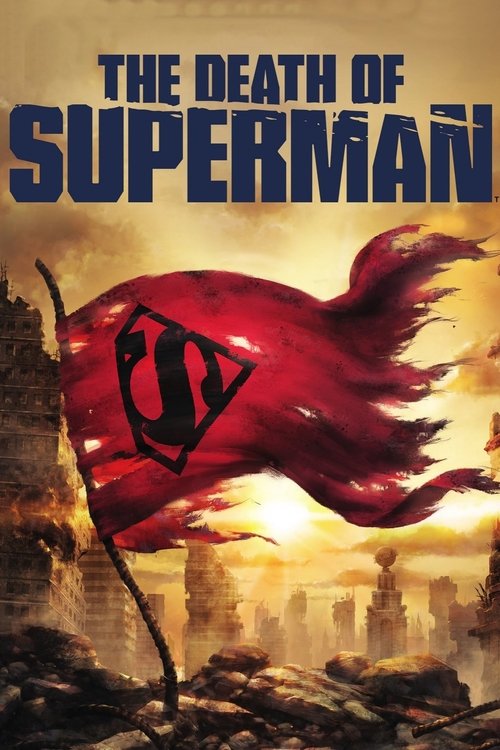
The Death of Superman
Science FictionAnimation+3
-
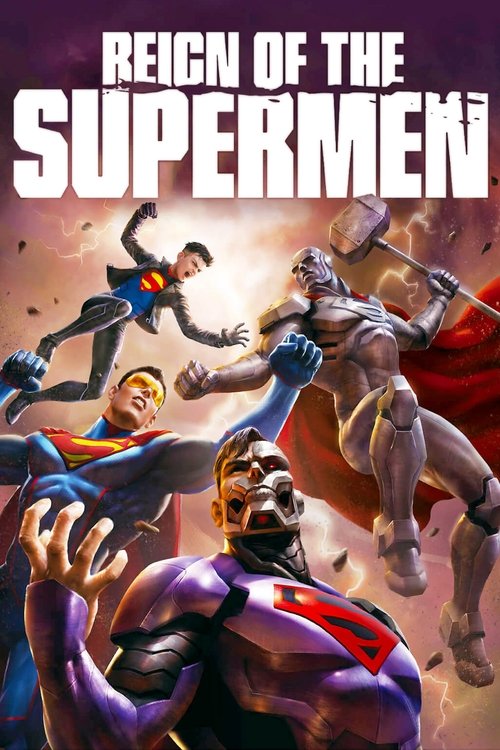
Reign of the Supermen
Science FictionAnimation+4
-
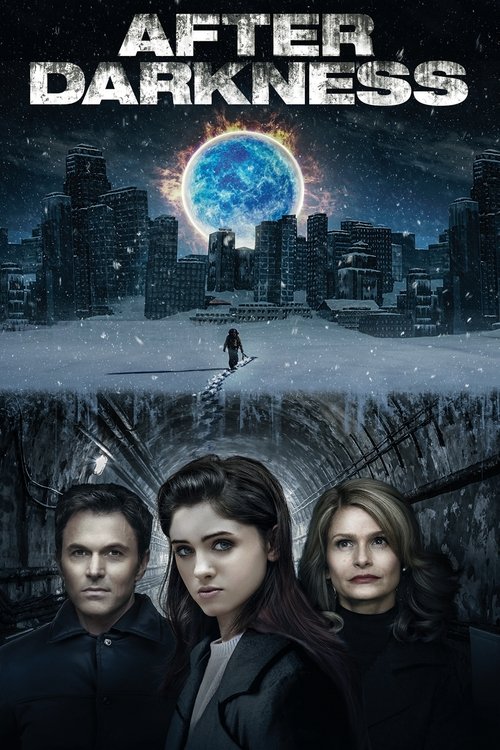
After Darkness
DramaFamily+2
-

IO
Science Fiction
-

Made in Abyss: Wandering Twilight
AnimationAdventure+3
-

Smash and Grab
AnimationScience Fiction
-

Iron Sky: The Coming Race
ActionComedy+2
-

Psycho-Pass: Sinners of the System - Case.1 Crime and Punishment
AnimationScience Fiction+1
-

The Relative Worlds
AnimationDrama+4
-

Alita: Battle Angel
ActionScience Fiction+1
-

Aniara
Science FictionDrama
-

Crossbreed
Science Fiction
-

The Wandering Earth
Science FictionAction+1
-

Crazy Alien
ComedyScience Fiction
-

9
Science FictionThriller+2
-

The Man Who Killed Hitler and Then the Bigfoot
DramaAdventure+3
-

Code Geass: Lelouch of the Re;surrection
AnimationScience Fiction+3
-

Happy Death Day 2U
ComedyHorror+1
-

Breaking Barbi
ComedyScience Fiction
-

Psycho-Pass: Sinners of the System - Case.2 First Guardian
AnimationScience Fiction+1
-

Foxtrot Six
ActionDrama+1